


If your rental property is generating income but still feels like it’s costing more than it should, you’re not alone. Many landlords focus on collecting rent without regularly reviewing the dozens of smaller decisions that affect long-term profitability.
The good news? Improving rental property cash flow usually isn’t about making one dramatic change. It’s about consistently optimizing rent, reducing unnecessary expenses, planning for major repairs, and running your rentals with clear financial visibility.
Whether you own one rental or an expanding portfolio, this checklist from RentRedi will help you identify practical ways to strengthen monthly cash flow while protecting your investment for years to come.
Quick Answer: How can landlords improve rental property cash flow?
The fastest way to improve rental property cash flow is to regularly review rental income, reduce recurring expenses, prevent costly vacancies, carefully screen tenants, and track financial performance monthly. Small improvements across multiple areas often yield larger long-term gains than relying solely on rent increases.
Who This Checklist Is For?
This guide is designed for:
- Independent landlords
- Rental property investors
- Owners with one to 20 rental units
- New landlords looking to improve profitability
- Experienced investors reviewing portfolio performance
Why Rental Property Cash Flow Matters
Cash flow is the money left over after collecting rent and paying all operating expenses, debt payments, taxes, insurance, maintenance, and other property costs. Positive cash flow helps landlords:
- Handle unexpected repairs
- Reinvest in their properties
- Grow their portfolio
- Reduce financial stress
- Build long-term wealth
Even properties with strong appreciation can become financial burdens if monthly cash flow consistently falls short.
Rental Property Cash Flow Checklist
1. Review Your Rent Every Six to 12 Months
Compare your rent against similar local properties using Zillow, Rentometer, or local listings. Even a modest $50–$100 monthly increase can generate hundreds or thousands of dollars in additional annual income while keeping your property competitively priced.
Takeaway: Small annual rent adjustments often outperform large, infrequent increases.
2. Create Additional Income Streams
Rent isn’t always your only revenue source. Consider charging separately for:
- Parking
- Storage units
- Pet rent or pet fees
- Washer and dryer rentals
- Furnished units
- Premium internet packages (where applicable)
These optional amenities can improve monthly cash flow without significantly increasing operating costs.
3. Pass Utilities to Tenants When Possible
If local laws and property setup allow, shifting utilities to tenants reduces one of the most unpredictable operating expenses.
Examples include:
- Electric
- Gas
- Water (with submetering)
- Internet
Predictable expenses make budgeting far more accurate.
4. Reduce Vacancy Before It Starts
Every vacant month is difficult to recover. Start renewal conversations 60–90 days before lease expiration, market vacancies early, and reward reliable tenants with reasonable renewal incentives. Keeping a great tenant is usually less expensive than replacing one.
Reduce Expenses Without Cutting Corners
5. Review Your Mortgage Rate
Interest rates change. If you’ve owned your property for several years, refinancing—or shopping lenders when buying your next investment—could improve monthly cash flow. Even small interest rate reductions may save hundreds each month.
6. Compare Insurance Every Renewal
Insurance markets change constantly. Request multiple quotes every renewal period and ask about:
- Multiproperty discounts
- Bundle pricing
- Higher deductibles (if appropriate)
Many landlords overpay simply because they never compare options.
7. Challenge Your Property Tax Assessment
Property taxes are often one of the largest operating expenses. If your property's assessed value exceeds comparable recent sales, consider filing an appeal during your county's assessment window. According to research from the National Taxpayers Union Foundation, approximately 40% to 60% of property tax appeals result in a reduced assessment.
8. Stay Ahead of Maintenance
Preventive maintenance almost always costs less than emergency repairs. Create recurring schedules for:
- HVAC servicing
- Gutter cleaning
- Roof inspections
- Caulking
- Plumbing inspections
Routine maintenance extends equipment life and reduces surprise expenses.
9. Build a Dedicated Reserve Fund
Unexpected repairs aren't optional. Many investors recommend saving 5%-10% of monthly rental income in a dedicated reserve account for future capital expenses, such as:
- Roof replacement
- HVAC systems
- Appliances
- Flooring
- Water heaters
Cash reserves prevent repairs from disrupting positive cash flow.
10. Negotiate Vendor Contracts
Landscapers, cleaners, pest control companies, and snow removal services often offer flexible pricing. Ask about:
- Annual agreements
- Multiproperty discounts
- Early payment discounts
Small savings across several vendors add up quickly.
Optimize Taxes and Financing
11. Track Every Deductible Expense
Many landlords miss legitimate deductions.
Examples include:
- Mortgage interest
- Repairs
- Property management software
- Mileage
- Professional services
- Office supplies
Maintaining organized records throughout the year simplifies tax season and may reduce taxable income.
12. Ask Your CPA About Cost Segregation
Cost segregation allows certain property components to depreciate faster than the building itself. For qualifying investors, this strategy can significantly increase near-term tax deductions. Because every situation differs, consult a qualified CPA before making tax decisions.
13. Review Your Entity Structure
As your portfolio grows, your legal and tax structure should evolve too. Depending on your circumstances, an LLC or another entity may improve:
- Liability protection
- Tax flexibility
- Portfolio management
Work with a real estate attorney or tax professional to determine the best approach.
Strengthen Your Operations
14. Screen Tenants Carefully
One bad tenant can erase months of positive cash flow. A comprehensive screening process should verify:
- Credit history
- Income
- Employment
- Rental history
- Eviction records
- References
Strong tenant selection often reduces late payments, vacancies, and property damage.
15. Know Your Numbers Every Month
Many landlords only review finances during tax season. Instead, maintain a monthly profit and loss statement that tracks:
- Income
- Operating expenses
- Repairs
- Vacancy
- Net cash flow
Consistent reporting helps identify trends before they become expensive problems.
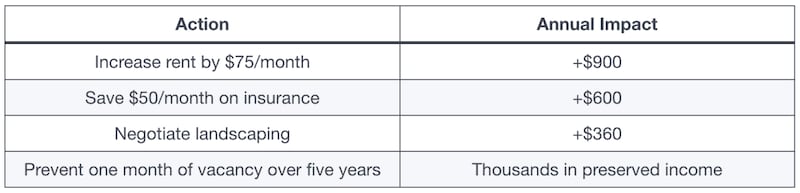
Example: Small Improvements Add Up
Imagine a landlord with a single rental property generating $2,000 per month. By making a few strategic changes, they could improve annual cash flow without purchasing another property:
RentRedi
None of these changes is dramatic individually. Together, they meaningfully strengthen long-term profitability.
Common Cash Flow Mistakes Landlords Make
Avoid these common pitfalls:
- Waiting years to review rent
- Ignoring recurring monthly expenses
- Underfunding maintenance reserves
- Choosing tenants too quickly
- Waiting until tax season to organize finances
- Managing everything manually with disconnected spreadsheets
The most successful landlords review cash flow consistently—not just when something goes wrong.
Why This Matters Right Now
Operating costs continue to fluctuate due to inflation, insurance premiums, property taxes, labor costs, and financing expenses.
That makes proactive cash flow management more important than ever. Landlords who regularly review income, expenses, and operations are better positioned to maintain profitability regardless of changing market conditions.
Improving rental property cash flow isn’t about finding one magic solution. It’s about making consistent, informed decisions across your income, expenses, taxes, financing, and day-to-day operations.
Working through this checklist once a year—and reviewing your financial performance every month—can help you reduce unnecessary costs, increase profitability, and build a more resilient rental business over time.
If you’re managing your rentals manually, using property management software that tracks income, expenses, maintenance, rent collection, and reporting in one place can make it much easier to monitor cash flow and identify opportunities for improvement.
Frequently Asked Questions
What is good rental property cash flow?
Positive rental property cash flow means your rental income exceeds all expenses, including mortgage payments, taxes, insurance, maintenance, and vacancies. Many investors also aim to maintain a reserve fund for future capital expenses.
How often should landlords review rental rates?
Review comparable rental listings every six to 12 months and adjust pricing when market conditions and local regulations allow.
What expenses have the biggest impact on rental cash flow?
Mortgage payments, vacancies, property taxes, insurance, maintenance, and unexpected repairs are typically the largest expenses affecting cash flow.
How much should landlords save for repairs?
A common guideline is to reserve 5%-10% of monthly rental income for future maintenance and capital expenditures, though the ideal amount depends on the property’s age and condition.
What’s the fastest way to improve rental property cash flow?
For many landlords, the quickest wins come from reducing vacancies, reviewing rent against market rates, minimizing recurring expenses, and screening tenants carefully to reduce costly turnover and unpaid rent.
This story was produced by RentRedi and reviewed and distributed by Stacker.